
Table of Contents
New Orleans Fence Company | Iron, Wood & Custom Fencing | Big Easy Iron Works
Owning a home in New Orleans means dealing with challenges that flat-state homeowners never think about: subtropical humidity that warps and rots untreated wood within a few seasons, heat indexes above 105 degrees that make vinyl brittle and discolored, soil that shifts after heavy rain, and Historic District Landmarks Commission (HDLC) requirements that govern what you can and cannot install if your property sits in a designated historic district. Choosing the wrong fence material is an expensive mistake. Big Easy Iron Works has been installing fences across New Orleans for over 30 years, and we understand this city’s climate, architecture, and permitting landscape better than any national chain ever could. Call us at (504) 732-0066 for a free estimate.
Fence Types We Install in New Orleans
Every property is different, and so is every fence project we take on. Whether you need a custom iron perimeter fence for a Garden District Victorian, a wood privacy fence for an Uptown backyard, or a plantation-style fence that satisfies HDLC design review, we have the materials, welders, and installation crews to handle it. Below are the fence types we install, each with a dedicated page covering materials, design options, and pricing:
- Custom Iron Fencing – Designed and fabricated in-house by our professional welders. If you have a specific pattern, height, or decorative element in mind, we build it from scratch to match your property and your vision. Custom iron fencing is the most durable option for New Orleans’ climate and is preferred by HDLC for properties in historic districts.
- Traditional Fencing – Classic picket and rail fence styles that complement cottage homes, garden spaces, and properties where a decorative rather than full-privacy barrier is the goal. Traditional fencing works well in Uptown, Mid-City, and Lakeview neighborhoods where a clean, open look is preferred.
- Plantation Fencing – A style rooted in Louisiana’s architectural heritage, plantation fencing features a distinct vertical-and-horizontal pattern with strong visual presence. It adds historical character while providing a meaningful security perimeter. Common in areas near the Garden District and along historic corridors.
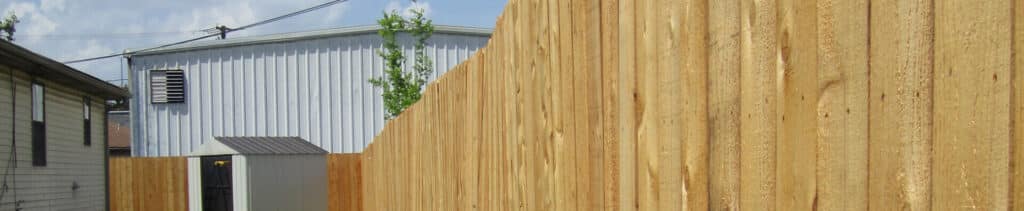
- Wood Privacy Fencing – For homeowners who want full privacy in their backyard, a properly installed wood fence using pre-treated, rot-resistant lumber is a practical choice. We source quality lumber and install it with the hardware and post depth needed to handle New Orleans’ wet soil conditions and storm-season wind loads.
We also install aluminum fencing, chain link fencing, and can incorporate slide gates, double swing gates, and rolling driveway gates into any fence project.
Why New Orleans Homeowners Choose Iron Fencing
Iron fencing is the dominant fence style in New Orleans for reasons that go well beyond aesthetics. The city’s architecture and climate both point toward iron as the most practical long-term choice, and local regulations in many neighborhoods reinforce that preference.
New Orleans Climate and Iron Fence Durability
New Orleans averages over 60 inches of rain per year and regularly sees relative humidity above 90 percent during summer months. That environment is hostile to wood and vinyl fencing. Untreated wood exposed to that level of moisture swells, warps, and begins to rot within two to four years. Even pressure-treated lumber requires consistent sealing and upkeep to last a decade in south Louisiana. Vinyl fencing, while low-maintenance in dryer climates, becomes brittle in high UV environments and can crack or discolor within a few years under a New Orleans summer sun.
Ornamental and wrought iron, by contrast, handles humidity well when properly coated. A quality powder coat or paint finish protects the metal from oxidation. If a section does show rust, it can be treated and recoated without replacing the entire fence. Iron does not warp, swell, or crack. In wind events, a well-installed iron fence bends without failing the way wooden panels can. For homeowners looking at a 20- to 30-year lifespan from their fence investment, iron is the clear material choice in this climate.
Historic District Landmarks Commission (HDLC) Requirements
If your property sits within a designated historic district, including the French Quarter, Garden District, Tremé, Esplanade Ridge, or several other protected areas in New Orleans, your fence requires HDLC approval before installation. The HDLC reviews fence applications for consistency with the historic character of the neighborhood. In most cases, iron or wrought iron fencing is the preferred material, and the Commission often requires specific height limits, pattern types, and finish colors. Wooden privacy fences are generally not approved for front yards in HDLC-regulated areas.
Big Easy Iron Works has worked on HDLC-reviewed projects throughout New Orleans. We understand what the Commission looks for and can help you prepare design documentation and select materials that are likely to receive approval. We do not submit permit applications on your behalf, but we can guide your project toward compliance from the design phase forward.
Curb Appeal and Property Value
Iron fencing has a strong visual impact on property value. A well-designed iron fence with matching gate hardware signals upkeep and quality to potential buyers, and in New Orleans’ competitive real estate market, that matters. Studies from real estate data firms consistently show fenced properties selling faster and at slightly higher price points than comparable unfenced homes. Custom iron fencing, in particular, adds an architectural element that cannot be easily replicated or quickly installed by the next owner.
Choosing the Right Fence for Your New Orleans Property
The best fence for your property depends on four factors: your primary goal (security, privacy, decoration, or boundary definition), your neighborhood’s HOA or HDLC requirements, your budget, and the physical characteristics of your lot. Here is a breakdown of how different fence types perform across those factors in the New Orleans context:
Security and Perimeter Control
For properties where security is the primary goal, ornamental iron with a minimum height of six feet and pointed or spear-top finials is the most effective option. The visual deterrent of iron fencing is significant, and the material itself cannot be cut quickly with simple tools. Chain link offers a budget-conscious security option for side yards, rear perimeters, and commercial properties, though it provides no visual barrier. Wood privacy fencing can also serve a security function for rear yards, particularly when installed at six feet or taller with no horizontal rails on the exterior face that could assist climbing.
Privacy Fencing in a Dense Urban Environment
New Orleans lots are often narrow, and homes sit close together. A six-foot wood privacy fence on a rear or side lot line creates a meaningful visual separation between properties. Louver-style wood fencing allows airflow, which matters in summer, while still blocking sightlines. For front yards in most neighborhoods outside HDLC zones, a decorative iron fence or traditional picket fence is the typical choice, since solid privacy fencing at the street line is often restricted by city ordinance or HOA rules.
HOA Rules and Permit Requirements
Even outside HDLC-regulated areas, many New Orleans and suburban neighborhood associations have fence covenants governing height, material, color, and placement. Metairie and Kenner neighborhoods, in particular, often have HOA restrictions on fence styles visible from the street. Before starting any fence project, it is important to check your HOA governing documents and contact the City of New Orleans Permits and Inspections office, or your parish building department if you are outside Orleans Parish. Permits are generally required for any fence over four feet in height.
Insurance Implications
A fence that encloses a swimming pool is a safety feature that can affect your homeowner’s insurance premium. Louisiana insurance carriers often look for pool enclosures that meet specific height and latch requirements. We can install pool perimeter fencing that meets those requirements while still complementing the aesthetic of your property.
Neighborhoods We Serve
Big Easy Iron Works installs fences across Orleans Parish and the surrounding metro area. Below are the neighborhoods and communities we serve most frequently, along with the fence considerations specific to each:
French Quarter
The French Quarter sits within one of the most actively enforced HDLC districts in New Orleans. Iron fencing is nearly universal here, and new fence installations require HDLC Certificate of Appropriateness approval. We are familiar with the design standards for this neighborhood and can recommend iron fence styles that align with HDLC guidelines.
Garden District
The Garden District features some of the most impressive iron fence installations in the city, framing Victorian-era mansions and double-gallery homes. Custom iron fencing here needs to match the scale and ornamentation of the architecture. We design and fabricate custom patterns in-house, so we can match an existing section of historic fencing or create a complementary new design.
Uptown
Uptown properties range from smaller cottages to large single-family homes on wide lots. Traditional and ornamental iron fencing works well here, as do wood privacy fences for rear yards. Many Uptown streets have mature oak canopy, which means fence posts must be installed carefully to avoid root systems.
Lakeview
Lakeview was heavily rebuilt after Hurricane Katrina, and many homes here are newer construction on rebuilt lots. Soil compaction after post-storm leveling can affect post installation, and we take that into account when setting depth and using concrete footings. Aluminum and iron fencing are both popular in Lakeview for their longevity and low maintenance requirements.
Mid-City
Mid-City is a mixed residential and commercial neighborhood with a diverse housing stock. Traditional picket fencing and ornamental iron are common here. The neighborhood sits in a low-lying area, so drainage is a consideration in post placement and gate swing clearance.
Tremé and Bywater
Tremé is one of the oldest neighborhoods in New Orleans and includes several HDLC-regulated blocks. Bywater is adjacent to the Marigny and features a concentration of Creole cottages and shotgun homes where iron fence styles need to match the modest scale of the architecture. We have experience designing appropriately scaled iron fencing for both neighborhoods.
Algiers
Algiers is on the West Bank of the Mississippi and includes Algiers Point, a historic area with its own architectural character. We serve Algiers Point and the surrounding Algiers neighborhoods with the same iron fabrication and wood installation capabilities we bring to the East Bank.
Metairie and Kenner
Jefferson Parish suburbs including Metairie and Kenner have active HOA communities with specific fence requirements. We are familiar with the common HOA standards in these areas and can recommend fence styles that meet community guidelines while satisfying your practical and aesthetic goals. Iron, aluminum, and wood privacy fencing are all in demand in these suburbs.
Gretna and the West Bank
Gretna and other West Bank communities in Jefferson and Plaquemines parishes are part of our service area. We regularly install fencing in residential subdivisions across the West Bank, including traditional iron perimeter fencing, wood privacy fencing, and chain link for larger lots and commercial properties.
Covington and Mandeville
Northshore communities including Covington and Mandeville are within our service range. Properties on the Northshore often have larger lots with more linear footage of fencing needed, and the wooded terrain in many areas requires careful post placement. We handle Northshore projects with the same crew and materials we use in Orleans Parish.
Fence Installation Process at Big Easy Iron Works
We follow a consistent process on every fence project to make sure the result matches what you envisioned and lasts for the long term. Here is what to expect when you work with us:
Step 1: Free Consultation and Property Walkthrough
We start with a site visit and walkthrough of your property. Our team measures the perimeter, notes any grade changes, identifies underground utility lines to avoid, and discusses your goals for the fence in terms of security, privacy, aesthetics, and budget. We also ask about any HOA or HDLC requirements that apply to your property.
Step 2: Design and Material Selection
Based on the consultation, we present fence design options and material recommendations specific to your property. For custom iron projects, our in-house welders can fabricate panels to a specific pattern, height, and finish. For wood and aluminum projects, we review lumber grades, post materials, and hardware options. You review and approve the design before we move forward.
Step 3: Permit and HOA Approval
For projects in HDLC districts or HOA-governed communities, permits and approvals need to be in hand before installation begins. We can advise you on what documentation is typically required and review your design for likely compliance, though permit submission and approval remain the responsibility of the property owner. We will not begin installation on a regulated project without confirmation that required approvals are in place.
Step 4: Installation
Our installation crew sets posts with concrete footings at the appropriate depth for New Orleans soil conditions, then installs fence panels, rails, and hardware. For iron fencing, all welded connections are finished and touched up on-site. Gate hardware, including hinges, latches, and locking mechanisms, is installed and tested before we leave. We work to keep disruption to your yard and your neighbors’ property to a minimum throughout the installation.
Step 5: Final Walkthrough and Cleanup
Before we consider a project complete, we walk the finished fence with you to confirm alignment, gate function, and finish quality. Any adjustments are made on-site. We clean up all materials, concrete bags, and debris before leaving. You receive a contact number for warranty follow-up if any issue arises after installation.
Fence Cost in New Orleans
Fence pricing in New Orleans varies based on material, linear footage, terrain, gate additions, custom fabrication requirements, and current material costs. The figures below reflect typical installed price ranges in the Greater New Orleans area. These are estimates; your actual project cost will be provided in a free written estimate after we visit your property.
- Ornamental or wrought iron fencing: $30 to $70 per linear foot installed. Custom fabricated designs with decorative elements are at the higher end of this range. Standard ornamental iron panels fall in the middle.
- Aluminum fencing: $20 to $40 per linear foot installed. Aluminum is a corrosion-resistant alternative to iron that is lighter and less expensive. It does not rust and holds paint well, but it cannot be custom-fabricated in the same way iron can.
- Wood privacy fencing: $15 to $30 per linear foot installed. Pricing depends heavily on the wood species and grade selected, the height of the fence, and the complexity of the terrain. Pre-treated pine is the most common choice in New Orleans. Cedar and redwood are more rot-resistant but cost more upfront.
- Chain link fencing: $8 to $15 per linear foot installed. Chain link is the lowest-cost option for enclosing large areas and is common for rear yard perimeters, commercial properties, and utility enclosures.
Gate additions typically cost $300 to $2,000 or more depending on width, material, and whether the gate is manually operated or motorized. Custom iron gate fabrication is priced separately based on design complexity. Call us at (504) 732-0066 for a free on-site estimate specific to your property.
Frequently Asked Questions About New Orleans Fence Installation
Do I need a permit to install a fence in New Orleans?
In most cases, yes. The City of New Orleans requires a building permit for fences that exceed four feet in height. If your property is in an HDLC-regulated historic district, such as the French Quarter, Garden District, or Tremé, you also need a Certificate of Appropriateness from the Historic District Landmarks Commission before any exterior work can begin. In Jefferson Parish municipalities including Metairie and Kenner, permit requirements are set by the parish or municipality and may differ from Orleans Parish rules. We recommend contacting your local permitting authority before starting any fence project. We can guide you on what documentation is typically needed, but permit applications are submitted by the property owner.
What is the best fence material for New Orleans’ climate?
Iron and aluminum are the most durable fence materials for New Orleans’ subtropical climate. The city averages over 60 inches of rain annually and sees relative humidity above 90 percent for much of the summer. That level of moisture accelerates wood rot and makes vinyl brittle over time. Iron fencing with a proper powder coat or paint finish holds up well in humid conditions and can be spot-treated and recoated if corrosion begins. Aluminum is inherently rust-resistant and requires very little maintenance. If you prefer a wood fence, pressure-treated lumber with a quality sealant extends the lifespan significantly, but wood will still require more regular maintenance than iron or aluminum in this climate.
How long does fence installation take in New Orleans?
A straightforward residential fence installation typically takes one to three days depending on the linear footage, material type, and number of gates. Custom iron fence projects that require in-house fabrication have a longer lead time, generally two to four weeks from design approval to installation, because the panels need to be welded and finished in our shop before they are brought to your property. Wood and aluminum fence installations from stock materials can often be scheduled and completed within one to two weeks of deposit. We will give you a realistic timeline at the time of your estimate based on our current project schedule.
How much does a wrought iron fence cost in New Orleans?
Ornamental and wrought iron fencing in New Orleans typically costs between $30 and $70 per linear foot installed. A standard residential perimeter fence of 150 linear feet would fall in the range of $4,500 to $10,500 depending on height, panel design, and the number of gates included. Custom fabricated designs with unique patterns or decorative elements are at the higher end of that range. The best way to get an accurate price is to schedule a free on-site estimate. We measure your property, review your goals, and provide a written quote with no obligation.
Can I install a fence in an HDLC historic district?
Yes, but you need to obtain a Certificate of Appropriateness from the Historic District Landmarks Commission before installation. The HDLC reviews fence applications to ensure the proposed design is consistent with the historic character of the district. In most historic districts, iron fencing is the preferred material for front yards and street-facing perimeters. The Commission has specific guidelines on height, style, and finish color for different districts. We are experienced in designing iron fences for HDLC-regulated properties and can help you select a design that is likely to meet the Commission’s requirements. Final approval rests with the HDLC.
Does a fence increase home value in New Orleans?
In most cases, yes. A well-installed fence adds to curb appeal, defines the property boundary clearly, and in the case of iron fencing, signals quality and investment in the property. Real estate professionals in New Orleans commonly note that fenced properties, particularly those with ornamental iron that complements the architecture, tend to generate stronger buyer interest than comparable unfenced homes. A fence that encloses a pool or creates a defined outdoor living space is especially valued in the New Orleans market, where outdoor entertaining is a major part of daily life. The actual value increase depends on the quality of the fence, the neighborhood, and current market conditions.
How do I maintain a wrought iron fence in New Orleans?
Annual maintenance is the key to keeping an iron fence in good condition in New Orleans’ humid environment. At minimum, inspect the fence once a year for rust spots, paint chips, and any loose welds or hardware. Small rust spots should be treated promptly: wire-brush the area to remove loose rust, apply a rust-inhibiting primer, and repaint with an exterior metal paint or powder coat touch-up product. Full repainting of an iron fence every five to eight years is typical in New Orleans’ climate. Check gate hinges and latches annually and lubricate moving parts with a weather-resistant lubricant. Keeping vegetation trimmed away from the fence base also reduces moisture retention at ground level, which is where most corrosion starts.
What is the difference between ornamental iron and wrought iron fencing?
Traditionally, wrought iron referred to a specific type of iron alloy that was worked by hand at high temperatures. True wrought iron is rarely produced today because of cost. Modern ornamental iron fencing is made from mild steel that is welded, shaped, and finished to create the same decorative appearance as traditional wrought iron. For practical purposes, the terms are used interchangeably in the fence industry. The performance characteristics are similar: both are strong, can be custom-shaped, and are suited to the decorative fence styles common in New Orleans architecture. When Big Easy Iron Works refers to wrought iron or ornamental iron, we are using mild steel that is fabricated in our shop and finished to match the appearance of historic New Orleans ironwork.
Can Big Easy Iron Works match an existing historic iron fence pattern?
Yes. If you have an existing section of historic iron fencing that needs to be extended, repaired, or replicated for a new installation, our in-house welders can fabricate new panels to match the existing pattern. We start by measuring and photographing the existing fence to document the pattern, height, picket spacing, and any decorative elements such as fleur-de-lis finials or scrollwork. From there, we fabricate matching sections in our shop. This service is particularly valuable for properties in the Garden District, Tremé, and other historic neighborhoods where maintaining a consistent fence design is important for aesthetic and HDLC compliance reasons.
Do you install gates as part of a fence project?
Yes. Gates are part of most fence projects, and we install single swing gates, double swing gates, slide gates, and rolling driveway gates. For iron fence projects, we typically fabricate the gate in the same style as the fence panels so that everything matches. We install latch hardware, hinges, and locking mechanisms as part of the gate installation. If you need a motorized gate opener, we can incorporate the structural supports for an automatic opener, though the electronic operator itself is typically a separate installation coordinated with an automation specialist. Gate pricing depends on width, material, and design complexity.
How deep are fence posts installed in New Orleans?
Post depth in New Orleans requires extra attention because of the region’s soil conditions. The city sits on soft alluvial soil that retains moisture and can shift seasonally. Standard practice for New Orleans fence installation is to set posts a minimum of 24 to 36 inches below grade depending on fence height, with all posts set in concrete footings. Taller fences and gate posts require deeper footings. In areas with a high water table, we use concrete formulations that cure properly in wet conditions. Taking shortcuts on post depth and footing quality is the most common cause of fence failure in New Orleans, and it is something we do not compromise on regardless of project budget.
Do you serve areas outside of New Orleans proper?
Yes. Our service area includes Orleans Parish, Jefferson Parish (Metairie, Kenner, Harahan, Gretna, Westwego), the West Bank communities of Algiers, Terrytown, and Harvey, and the Northshore including Covington and Mandeville. For projects outside our primary service area, contact us to confirm availability and discuss any travel considerations. We have installed fences throughout the Greater New Orleans metro area and handle projects of all sizes, from small residential backyard enclosures to large commercial perimeter installations.
Ready to get started? Contact Big Easy Iron Works for a free, no-obligation estimate. Our team will come to your property, measure your project, review material options with you, and provide a written quote. We serve all of greater New Orleans and have for over 30 years. Call (504) 732-0066 or submit a request through our contact form and we will follow up within one business day.